
Keep Your Dirty Rotten Hands Off of My Romance Novels
Or, the Lost Art and Appreciation of Critique

I may be a teacher and scholar of Gothic, Horror, and Monsters, but in my free time, I read romance. In fact, I often joke that you can tell how stressed I am by how many romance novels I’ve consumed in a given month.
Like any reader, I struggle to find new recommendations. So, as one does, I turned to Reddit. At first, everything went swimmingly. Redditors in r/books, r/booksuggestions, r/RomanceBooks, and r/ReverseHarem are more than happy to share what they’re reading.
There are no problems.
Unless one wants to critique.
That’s the story of this essay: I read a popular series, posted a genuine critical analysis of it, and watched a reading community tell me, in several different ways, that analysis itself was the problem. What follows is the critique I posed, and then the response it got because I think the gap between the two says something worth sitting with about what we think “reader spaces” are for.
The Setup
It started with an innocent enough thread: “Fav RH books till now.” A great way to find new recs, right? From that list, I picked up The Deadwood series by Marie Mistry.
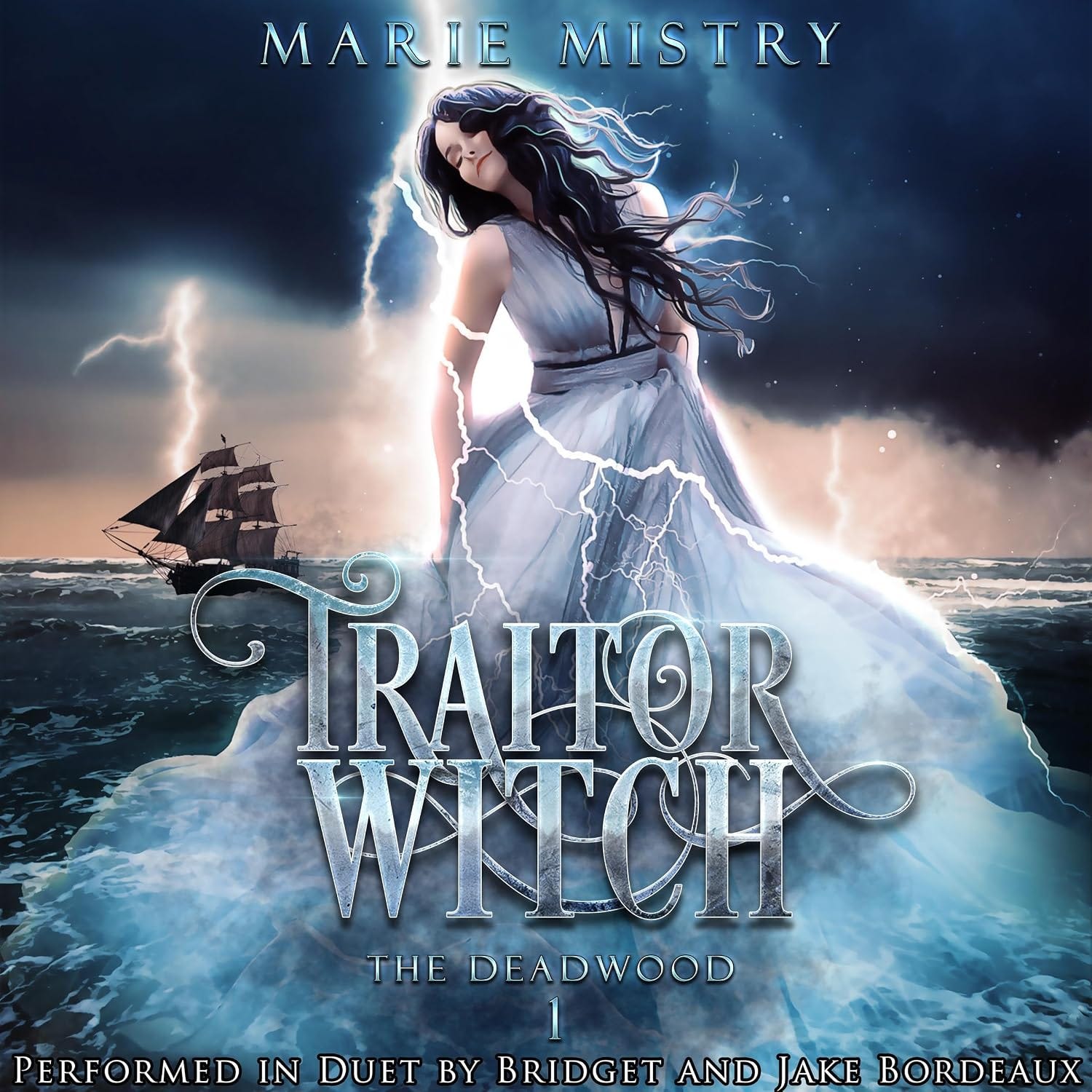
The world of the novel is created and controlled by three Goddesses: the Sun, the Moon, and Fate. Our FMC (female main character), Nilsa, is a witch of the Moon. In fact, she’s the Moon’s Shadow, a blessed assassin. Because of her status, she’s granted six supernatural fated mates. One of them, Noster, is a leviathan shifter who is touched by Fate, meaning he has future sight, but is blind (Mistry 2020).
I want to walk through two characters in this series, Noster and Nilsa, because the novel treats their disabilities so differently that the contrast becomes an argument in itself. Noster’s blindness is written as something he survives, adapts to, and is loved through. Nilsa’s potential for madness, not even madness itself, just the risk of it, gets her told by the man she loves that he’d rather she die. Same universe, same narrative logic of fated love, two wildly different verdicts on whose disability is compatible with being lovable. I think gender is doing most of the work in that split, and I want to show my reasoning before I get to how that reasoning was received.
Noster, the Blind MMC
At first blush, Noster reads as positive disability representation. He was heartbroken to lose his sight. It causes his father and brother to coddle him; he’d been training to become an Alpha, a dominant leader of his people, alongside his twin brother, and losing his sight upended that entire trajectory. It changed how he was treated by others. It shackled him.
Noster is a good character to read through the Social Model of Disability. Where the Medical Model treats disability as a problem to be fixed by doctors and institutions, the Social Model argues that what disables a person isn’t the impairment itself but the social structures built without them in mind e.g. tt’s not the need for a wheelchair that disables someone, it’s the absence of a ramp.
Noster rebels against his father, brother, and clan. That rebellion gets him and his brother captured and tortured in a traveling circus. This tracks with the real history of circuses and freak shows, where disability was staged as spectacle: reduced from person to exhibit, kept carefully separate from “normal” public life.
Everything changes when Noster and his brother escape and join the pirate crew of the Deadwood. His brother still tries to caretake him, but it’s Valorean, the bond mage who captains the ship, who gives Noster what he actually needs: tools that let him operate independently, like a magical text-reader. And it’s Nilsa who restores him to full personhood, not just through love but through desire. She’s attracted to him. That matters more than it might seem, because disability so often gets written as automatically incompatible with attractiveness and masculinity.
Here’s why that framing matters. Sociologist Trujillo identifies five traits of hegemonic masculinity: “physical force and control, occupational achievement, familial patriarchy, frontiersmanship, and heterosexuality” (1991, 291). Disability tends to foreclose most of these by default. Disabled bodies are read as less capable of exerting physical control, disabled labor is undervalued and underemployed, and physical impairment is treated as incompatible with “facing the wilderness” or claiming sexual dominance. Disabled men, as a result, are routinely written out of heterosexual desirability and out of the patriarchal-provider role.
Noster gets none of that erasure. Nilsa describes him, at their very first meeting, as “hard” and “gorgeous” (Mistry 2020, 35–36). She’s literally running for her life, knocks him over, lands on top of him, and still notices his erection. The second time she sees him, she comments “he and his twin absolutely dwarf me in height and bulk” (Mistry 2020, 42). By the end of the exposition, Noster has been given all five markers Trujillo names: force and control through sheer size, frontiersmanship through his profession as a pirate, and heterosexuality made explicit and repeatedly narrated. Across the trilogy, he gains more confidence and status through his relationship with Nilsa: he pleases his mate, talks his twin brother out of caretaking him, and relearns how to shift into his bestial, leviathan form.
Noster is never treated as a burden. It’s never suggested he’d be better off dead. All he needed was to be seen and treated as a full, masculine person; and through Nilsa, he gets there. His disability is never cured for him to earn his happy ending.
On its own, that’s a genuinely strong case for positive disability representation. But it stops looking that way the moment you turn from the body to the mind, and from the man to the woman.
Nilsa the potentially mad FMC
The novel’s central conflict is the human queen Catherine, the Eagle of Galmere, who has slaughtered the witches of both Sun and Moon as well as many other supernatural beings. To have any chance of beating her and her pet witch, the Alchemist, Nilsa must take on the markings of both Goddesses at once, an act that, in this world, drives witches mad.
We meet two witches who’ve already done this. The first is Lily, the Alchemist, who works for the queen and has engineered a cure for mortality out of pieces of immortals. She’s the novel’s engine of disruption and chaos. The second is Alletta, who lives alone, far outside witch society. She honors the will of the Goddesses and repeatedly helps Nilsa. No one would call Alletta kind; she threatens, she causes pain, she speaks and acts in ways most people find incomprehensible. But she isn’t evil. She’s working, in her own register, toward balance.
This is where I want to bring in La Marr Jurelle Bruce’s (2021) four varieties of madness: medicalized (madness as a condition to be diagnosed, treated, and institutionalized; the same logic as the Medical Model of disability, and the logic behind pathologizing things like hysteria or drapetomania); psychosocial (madness as a label society applies to behavior it finds threatening or incomprehensible); phenomenological (the individual’s own lived experience of a disordered mind); and rage (anger, read as dangerous specifically when it’s embodied by someone without power, aimed at someone with it).
Both Lily and Alletta read to me as psychosocially mad; we have no textual evidence either is phenomenologically mad. They act and speak outside cultural norms, and for that they’re condemned. But what actually threatens the people around them isn’t erratic behavior, it’s power that dominant systems can’t control. The text says they “sacrificed their sanity to wield the power of both Goddesses” (Mistry 2022, 271). That’s an external judgment. The only account of either’s interior experience is when Alletta says the madness “doesn’t set in right away” and that “the more you use the power, the less you care… until eventually you’re free” (Mistry 2022, 309–310). Read on its own terms, that’s less a diagnosis than a release from the behavior society expects of her.
That’s the only madness the reader, or characters within the novel, has to go on. So when Nilsa learns she has to go through the same process, and risk the same fate, that’s the only frame of reference we’re given for what’s coming.
Here’s the turn. When Nilsa’s fated mates, chosen for her by the Goddess herself, meant to love her unconditionally, learn she might go mad, they try to forbid it. Valorean tells her: “Madness isn’t worth the risk… If you turn into anything like that fucking lunatic—” and thinks to himself that her going mad “would be worse than her dying” (Mistry 2022, 271).
Once Nilsa goes through with it, Valorean’s response isn’t grief or fear, but rage: “What the fuck were you thinking?” yelled at a woman who is, at that moment, exhausted and in agony (Mistry 2022, 320). She answers through tears, “Do you think I wanted this… I committed blasphemy… I’d rather die than go mad, but it’s not just about what I want anymore” (Mistry 2022, 321). She leaves. Valorean keeps talking about her, to her other mates, without her, saying “She’s risking her mind. If she dies, we can follow her. If she goes mad—” (Mistry 2022, 322). Noster cuts in, “We stay with her and love her… I’d rather have a mad witch than no witch at all” (Mistry 2022, 322). Everyone else leaves the room, and Rysen, another of her mates, tells Noster he sees his point, but he “understand[s] Val’s point too” (Mistry 2022, 325).
Sit with who’s saying this. Valorean is the ship’s captain, leader of the pirate crew who are Nilsa’s mates. He’s resisted the mate bond for two and a half books. His intimacy with Nilsa is built on control, blindfolds, restraints, being used as he sees fit. And this is the man who tells his fated mate, in front of the rest of her partners, that he’d rather she died than lost her mind.
Why the Double Standard Matters
This isn’t a small inconsistency; it plugs directly into a long, ugly history. The only form of madness the text has actually shown us is psychosocial: behavior read as threatening by people who don’t understand it, not a documented break from reality. And there’s a well-worn history of mental illness being weaponized specifically against women: hysteria as a 19th-century tool for institutionalizing “difficult” women, and its contemporary descendant, dismissing women’s real medical symptoms as “just anxiety.” The madwoman in the attic isn’t a coincidence of 19th-century Gothic fiction; it’s a fixture of it, because the Gothic refuses to let that history stay buried. Wuthering Heights (Emily Brontë 1847), Jane Eyre (Charlotte Brontë 1847), “The Yellow Wallpaper” (Charlotte Perkins Gilman 1892) stage the same pattern: a woman shut away at home, held captive (often after childbirth), until she dies.
That’s the fate disability theorist Allison Kafer describes in Feminist, Crip, Queer (2013): the disabled future always already foreclosed, filled with nothing but pain and isolation until an inevitable death.
Noster gets blindness and gets to thrive. Nilsa gets the mere potential for madness and is told, by the man who’s supposed to love her unconditionally, that she’d be better off dead than a burden and a stranger to the people who claim to love her.
So: is it the difference in gender driving that gap? The difference between a body and a mind? Some intersection of both? And where, exactly, is the line the novel is drawing? How mad is too mad? Anxiety? Depression? OCD? BPD? Dementia? How disabled is too disabled? Blindness, deafness, deformity? When does a person become unlovable? Inhuman? When does their life become forfeit?
Those are the questions I brought to r/ReverseHarem.
The Response
It did not go the way I expected.
“I’ve never understood trying to compare things in books to the real world.” — kitnzkat
This is the position I find hardest to sit with, because it treats fiction as if it exists in a sealed room. It doesn’t. Authors live in the real world; meaning is made collaboratively between author, text, and reader, and all three carry the imprint of the world they’re in. Reading critically isn’t an optional extra skill for English majors. It’s a basic component of literacy.
“I don’t think that is what the author was trying to say that being disabled wasn’t worth living.” — Substantial_Sock_595
This one leans on authorial intent as the final word on meaning, which is a debate literary theory settled decades ago. Wimsatt and Beardsley’s “Intentional Fallacy” argues we can’t actually access what an author “meant,” only what the text does. Barthes goes further in “The Death of the Author,” arguing there’s no single correct meaning at all, because meaning is remade differently by every reader. What the author intended to say and what the text actually communicates are not the same question.
A cluster of related pushback landed together, and I think they’re worth taking as a group because they share a move: “You’re also not mentioning that this is something she is doing to herself, not something that is happening to her.” “It’s unfathomably sad, and personally I would rather die than someone I love deal with that on a daily basis. People are allowed to make that choice for themselves in some countries.” “I think you’ve hit the ‘bitch eating crackers’ stage of dislike for the book and you should put it down and walk away.” — Whole-Hippo-5992
The first move, “she’s choosing this,” is exactly the logic behind a disability hierarchy where some conditions are read as more legitimate and sympathetic than others (obesity, for instance, is almost always coded as the individual’s fault, which is used to justify excluding or dismissing people who have it). The second move brings in medically assisted dying, which, if we’re going there, means engaging with the actual testimony of disabled people in places like Canada, many of whom describe MAID less as autonomy and more as the last option left once they’ve been priced and neglected out of every other one. The third move is just deflection: whether or not I keep reading has nothing to do with whether the critique holds up.
“I blame Booktok for all the DNF shaming and the pressure/incentive to have a hot take on popular books because it gets views. It’s bleeding into every reader space even outside of TT. It’s really okay to just not like a book, and I feel like a lot of people think they have to find a reason why it’s bad or problematic. ‘I don’t like it’ is enough!” — Miss-Pear-6447
This is the one that actually stuck with me. I brought an academic reading with Disability theory, Mad theory, Crip theory, gender theory to compare two characters and two divergent treatments of disability. This response reframes that as an insipid hot take: content built for engagement, better suited to TikTok, and actively bad for reader spaces. Rigorous critical reading, recast as the same species of noise as clickbait discourse.
When Critique of the Book Becomes Critique of the Reader
I want to name something underneath all five of these responses, because I don’t think it’s incidental. Not one commenter engaged with whether my reading of Noster and Nilsa was accurate. They engaged with whether I should have said it at all. That’s a tell. When critique of a text gets rerouted into a referendum on the critic’s right to speak, you’re too online, you’re overthinking, you should just put it down, the object itself has stopped being a book and started being a stand-in for the reader’s own identity.
This is what fan studies calls ego-involvement: the more a text is woven into how someone understands themselves, their taste, their community, their hours of investment, the more a critique of the text registers as a critique of them. Eve Kosofsky Sedgwick (1997) made a related distinction between paranoid and reparative reading: paranoid reading approaches a text braced for the harm it might contain, while reparative reading holds onto a text protectively, assembling pleasure and meaning from it in a way that doesn’t want to be disturbed. What I was doing was paranoid reading, in Sedgwick’s specific sense, reading with suspicion, looking for what the text does to disabled bodies. What I ran into was a room full of reparative readers who’d built something of themselves into Deadwood, and who experienced my analysis not as a second perspective but as an intrusion on that attachment.
Sara Ahmed (2023) has a name for this: the feminist killjoy. Name the problem, and you become the problem. Nobody in that thread argued Noster’s disability and Nilsa’s madness were treated identically. Nobody argued the double standard didn’t exist. The energy went entirely toward managing me, my tone, my motives, my right to still be in the fandom while holding this opinion. That’s not a debate about a text. That’s a community protecting its own relationship to that text by discrediting the person who complicated it.
The Privilege of “It’s Just a Book”
Which gets me to the claim that did the most work in that thread, even though it was stated most casually: I’ve never understood trying to compare things in books to the real world. That sentence is doing more than expressing a reading preference. It’s asserting that fiction and politics are separable — that you can choose whether or not to read a text as connected to the world it came from.
That choice is not evenly available. It’s only available to readers whose own bodies and identities aren’t the ones on the page being sorted into lovable or disposable. If you are not disabled, you can read Nilsa being told she’d be better off dead and file it under “plot.” If you are disabled, if you have sat in a doctor’s office, or a workplace, or a family conversation where your worth was quietly being calculated against your impairment, that scene is not hypothetical. It is a more polished, better-lit version of an argument you have already had, possibly about your own life. “It’s just fiction” is a privilege of distance. It’s the reading position of someone whose personhood was never the thing on trial.
This is the same logic behind treating some readings as “neutral” and others as “political.” A reading that takes the book at face value, that doesn’t ask why the blind man gets to thrive and the woman who might go mad gets threatened with abandonment, isn’t actually apolitical. It just agrees with the politics already built into the text, so it doesn’t feel like a political act from the inside. Politics only becomes visible, in these spaces, the moment someone asks the text to account for the harm it reproduces. The reader who never has to ask that question, because the text was never going to sort them into the disposable category, gets to experience their own reading as the default, the neutral one, the real one. Everyone else’s reading gets labeled an agenda.
That asymmetry is the whole ballgame. Marginalized readers don’t get to opt out of politics when they open a book, because the book doesn’t opt out of them. It’s already decided, before they turn a single page, who in its world gets to be loved and who gets threatened with a better-off-dead. Claiming the freedom to not read politically is only a freedom for readers the text was never going to use against.
What Reader Spaces Are Actually For
Here’s the thing: everybody loves problematic things, and there’s no version of reading where every piece of media with troubling politics gets purged from the shelf. That was never my goal; I wasn’t trying to get the book cancelled. The post was tagged as a review, and I reviewed it, through a specific critical lens which I named clearly.
We don’t stop watching popular movies like Iron Man the moment we notice how misogynistic parts of it are. But we should be able to see it; and more to the point, we should be able to say so out loud without the conversation immediately becoming about whether we’re allowed to.
So: what are reader spaces actually for? Unequivocal love and praise? Rigorous engagement? Who gets to belong in them, and on what terms, and whose comfort are those terms actually protecting? If the reflex in these spaces is to treat critique as an attack on the reader rather than a reading of the text, and to treat “it’s just a book” as a neutral position rather than the privileged one it is, then we’ve built reader communities that can only function for the readers a given book was never going to hurt.
That’s not a small cost, because story isn’t a side hobby we do for fun in the margins of our real lives.It’s the dominant way human beings understand ourselves, the world, and our place in it. It’s how we make sense of other people. Every history we’ve ever been taught is a narrative, shaped by who got to tell it and what they chose to leave out. Every night’s news is a narrative, built from which stories get covered, which get buried, and whose suffering gets to register as newsworthy. If we cannot bring a critical eye to the narratives we consume, whether that’s a reverse harem romance or a news article, we are not protecting our enjoyment. We are opting out of the single most consequential skill literacy has to offer, and calling it a preference.
This is why the literacy crisis is bigger than the thing we usually mean when we say it. It isn’t only about whether a reader can decode a sentence or summarize a paragraph. It’s about whether they can infer, interpret, and see how a story is functioning underneath its plot, whether it’s reinforcing the existing order of who gets to be powerful, loved, and fully human, or whether it’s pushing back against that order. A reader who can follow Deadwood‘s plot but can’t see what it’s quietly arguing about whose disability is survivable is not fully literate, no matter how many books they’ve finished this year. That is the skill I was modeling in that thread. It’s the skill I ask my students to practice every day. And it’s the skill that this reading community told me, in multiple ways, to put down.
Works Cited
Ahmed, Sara. 2023. The Feminist Killjoy Handbook: The Radical Potential of Getting in the Way. Seal Press.
Barthes, Ronald. 1977. Image, Music, Text. Hill and Wang.
Bruce, La Mar Jurelle. 2020. How to Go Mad Without Losing Your Mind: Madness and Black Radical Creativity. Duke University Press.
Kafer, Allison. 2013. Feminist, Crip, Queer. Indiana University Press.
Mistry, Marie. 2022. Pirate Witch (The Deadwood Book 3). Amazon.
Mistry, Marie. 2020. Traitor Witch (The Deadwood Book 1). Amazon.
Sedgwick, Eve Kosofski. 1997. “Paranoid Reading and Repairative Reading; or You’re So Paranoid, You Probably Think This Introduction is About You.” Novel Gazing: Queer Readings in Fiction. Duke University Press.
Trujillo, Nick. 1991. “Hegemonic Masculinity on the Mound: Media Representations of Nolan Ryan and American Sports Culture.” Critical Studies in Mass Communication 8, no. 3:290-308.
Wimsatt, W.K. and M.C. Beardsley. 1946. “The Intentional Fallacy.” The Sewanee Review 54, no.3:468-88.